

Monster’s Job Scam Report finds candidates are routinely encountering suspicious offers across email, text, recruiter outreach, and job platforms, making trust a bigger part of the hiring process. That’s a major issue for candidates, but it also creates a growing challenge for legitimate employers and recruiters.
In this report, 95% of job seekers have encountered at least one suspicious job offer, while 98% say today’s job market makes candidates more vulnerable to scams. More than half of job seekers say they have been directly affected by a job scam attempt.
As job seekers become more cautious, employer credibility matters earlier in the process. Candidates are not only evaluating the role. They are also looking for signals that the opportunity, recruiter, and hiring process are legitimate.
Key Findings for Employers
- Job scams are widespread: 95% of job seekers have encountered at least one suspicious job offer.
- The current job market is increasing vulnerability: 98% say today’s tough job market makes candidates more vulnerable to scams.
- More than half have been targeted: 53% say they have been directly affected by a job scam attempt.
- Suspicious offers often appear outside normal applications: Email, text messages, and unsolicited recruiter outreach are the most common channels.
- Many scams follow recognizable warning signs: 63% say scams involve communication only through text or chat.
- Scams are changing candidate behavior: 48% say they are now skeptical of most outreach they receive.
Why Candidate Trust Now Starts Before the Application
Candidate trust is forming earlier in the hiring process. Before job seekers respond to a recruiter, click a link, or submit an application, many are evaluating whether the opportunity feels legitimate.
That matters because the same channels employers use to reach candidates, including email, text, recruiter outreach, job boards, and professional networking platforms, are also the places where job seekers report encountering suspicious offers.
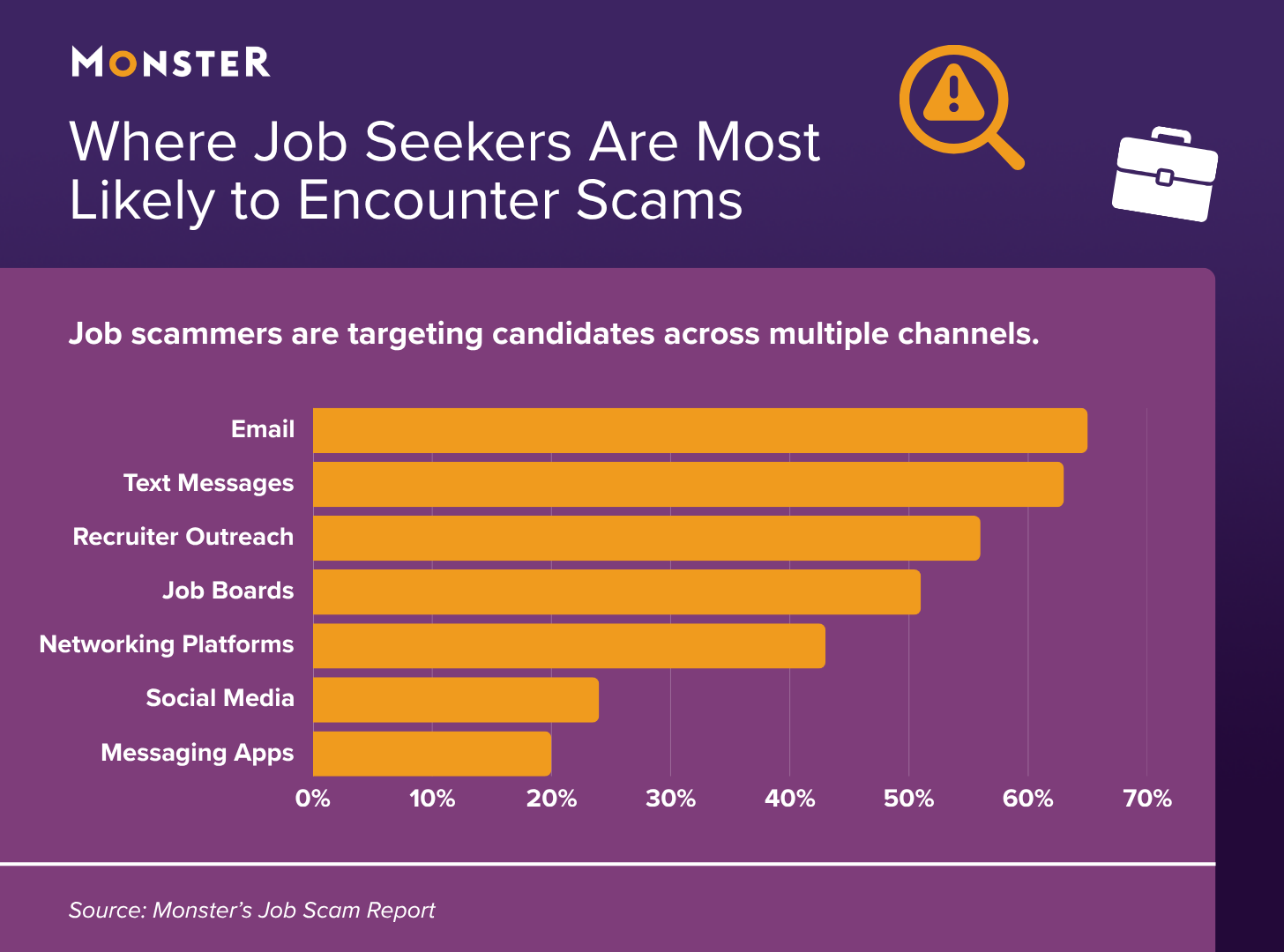
This report found that 65% encountered suspicious offers through email, 63% through text messages, 56% through unsolicited recruiter outreach, and 51% through job boards.
This aligns with a broader candidate experience trend: candidates are evaluating employers before the first conversation, looking for signs that the company is organized, transparent, and serious about the hiring process.
In this environment, small trust signals can carry more weight. Clear employer names, official email domains, verified job links, consistent recruiter communication, and transparent next steps can help candidates feel more confident that an opportunity is real.
Job Scams Are Reshaping Candidate Behavior
Nearly all job seekers surveyed say they have encountered suspicious offers. Sixty-one percent say they encountered many suspicious offers during their most recent job search, while 34% saw one or two. Only 5% reported not seeing anything suspicious at all.
That level of exposure can change how candidates respond to legitimate opportunities. Monster found that 48% of job seekers are now skeptical of most outreach they receive, 39% second-guess opportunities more often, and 10% avoid applying on certain platforms altogether.
This creates a trust gap in the hiring process. Recruiters may be reaching out with real opportunities, but candidates who have seen too many suspicious messages may hesitate before responding.
Suspicious Outreach Often Looks Like Recruiting Outreach
Monster found that scams commonly reach candidates through channels that do not always require a formal application. Job seekers most often reported encountering suspicious offers through email, text messages, and unsolicited recruiter outreach. More than half also reported seeing suspicious opportunities on job boards.
That matters because those are also common channels for legitimate recruiting. When scam outreach mimics hiring communication, candidates may become more guarded across the board.
Hiring teams can help reduce uncertainty by making outreach easy to verify. A message from a recruiter should clearly identify the employer, the role, the reason for outreach, and the next step. Candidates should also be able to confirm the job through an official company source.
Warning Signs Candidates Are Learning to Watch
Monster’s report shows that many scams follow recognizable patterns. Among job seekers who encountered suspicious offers, 63% reported communication only through text or chat, 57% were offered a job without a real interview, and 57% saw promises of unusually high pay for minimal work. Other warning signs included poor grammar, suspicious email addresses, mismatched URLs, and recruiters who could not clearly identify the hiring company.
Legitimate employers can stand apart by creating consistency across the hiring process. Clear recruiter identification, professional communication, transparent interview steps, and official application pathways can help candidates distinguish real opportunities from questionable ones.
Lost Time and Stress Can Affect Candidate Trust
Even when candidates avoid financial loss, scams can still take a toll. Monster found that 33% of job seekers lost time applying, interviewing, or following up on fake opportunities. Nearly one-quarter report ongoing stress or anxiety, and 23% say they shared personal information such as a phone number or address.
Job scams are not the only factor shaping candidate trust. Monster’s Application Black Box research also shows that unclear hiring processes can weaken trust and reduce candidate engagement before recruiters ever connect with applicants.
That experience may make candidates more selective, slower to respond, or more likely to ask verification questions. Hiring teams that treat those questions as a normal part of today’s candidate experience can build trust instead of adding friction.
Employer Pro Tips
- Make recruiter outreach easy to verify – Monster’s Messaging Help makes it easier for employers to create clearer candidate communications that build confidence from the first touchpoint.
- Be transparent about the process – Explain the interview steps, expected timeline, and who candidates will hear from next.
- Use consistent hiring channels – Employers can also leverage Monster’s Job Ad Resources to strengthen posting clarity, improve job ad performance, and help candidates find the right opportunities through trusted channels.
- Avoid urgency-driven language – High-pressure messages can resemble scam tactics. Clear, professional communication helps candidates feel more confident.
- Train recruiters and hiring teams on candidate trust signals – Candidates may ask more verification questions than they used to. A prepared, consistent response can help keep legitimate candidates engaged.
The Bottom Line
Job scams have become a routine part of the job search, and that reality is changing how candidates evaluate opportunities. Monster’s Job Scam Report shows that many job seekers are approaching outreach with more skepticism, even when the opportunity may be legitimate.
In a hiring environment where trust is harder to earn, employer credibility starts before the application. Clear recruiter communication, verified job postings, transparent hiring steps, and consistent follow-through can help employers reassure candidates and protect engagement throughout the hiring process.
Methodology
This survey was conducted by Monster on March 7, 2026, among 884 U.S. workers employed full-time. Participants answered a mix of yes/no, single-selection, and multiple-choice questions about their experience with job scams. The sample reflects a range of industries, age groups, and backgrounds across the U.S. workforce.