

Nearly half of job seekers say they apply to many roles quickly rather than focusing on a smaller number of opportunities that closely match their skills.
Often called “spray and pray,” this behavior is more than a candidate habit. It’s a signal that job seekers are responding to a hiring process that can feel unclear, automated, and hard to navigate.
What This Means for Recruiters and Hiring Managers
High application volume is often treated as a candidate problem. In reality, it can be a pipeline signal:
- 48% of job seekers say they apply broadly rather than selectively
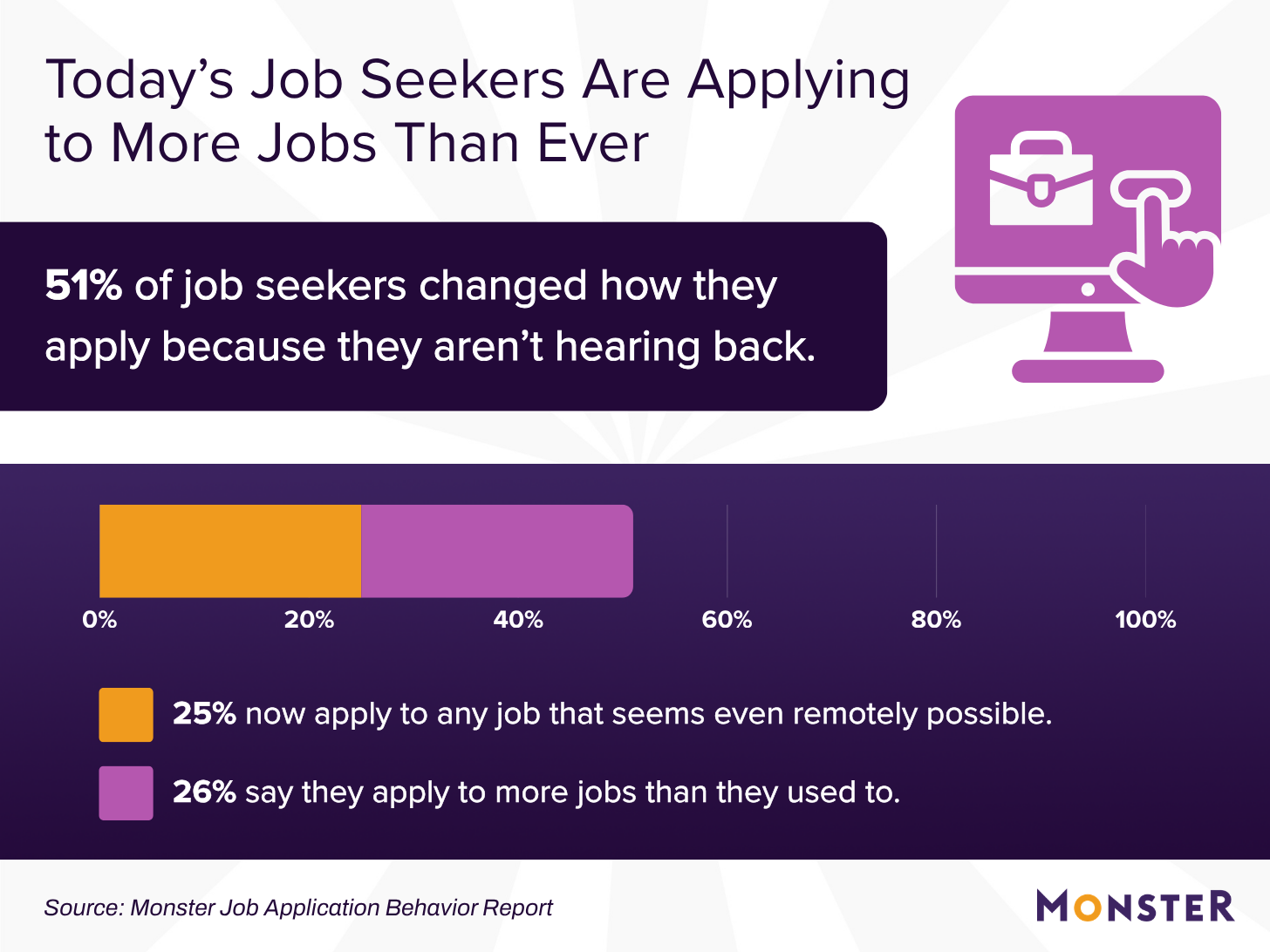
- 25% say they now apply to any job that seems remotely possible
- 14% focus on keywords instead of job fit, which can increase volume without improving alignment
More applications do not always mean a stronger pipeline. In many cases, they can create more noise, more screening work, and less clarity around candidate intent.
Why Job Seekers Are Applying This Way
The data points to a consistent driver: job seekers are reacting to the hiring process itself.
Limited feedback may be driving higher application volume
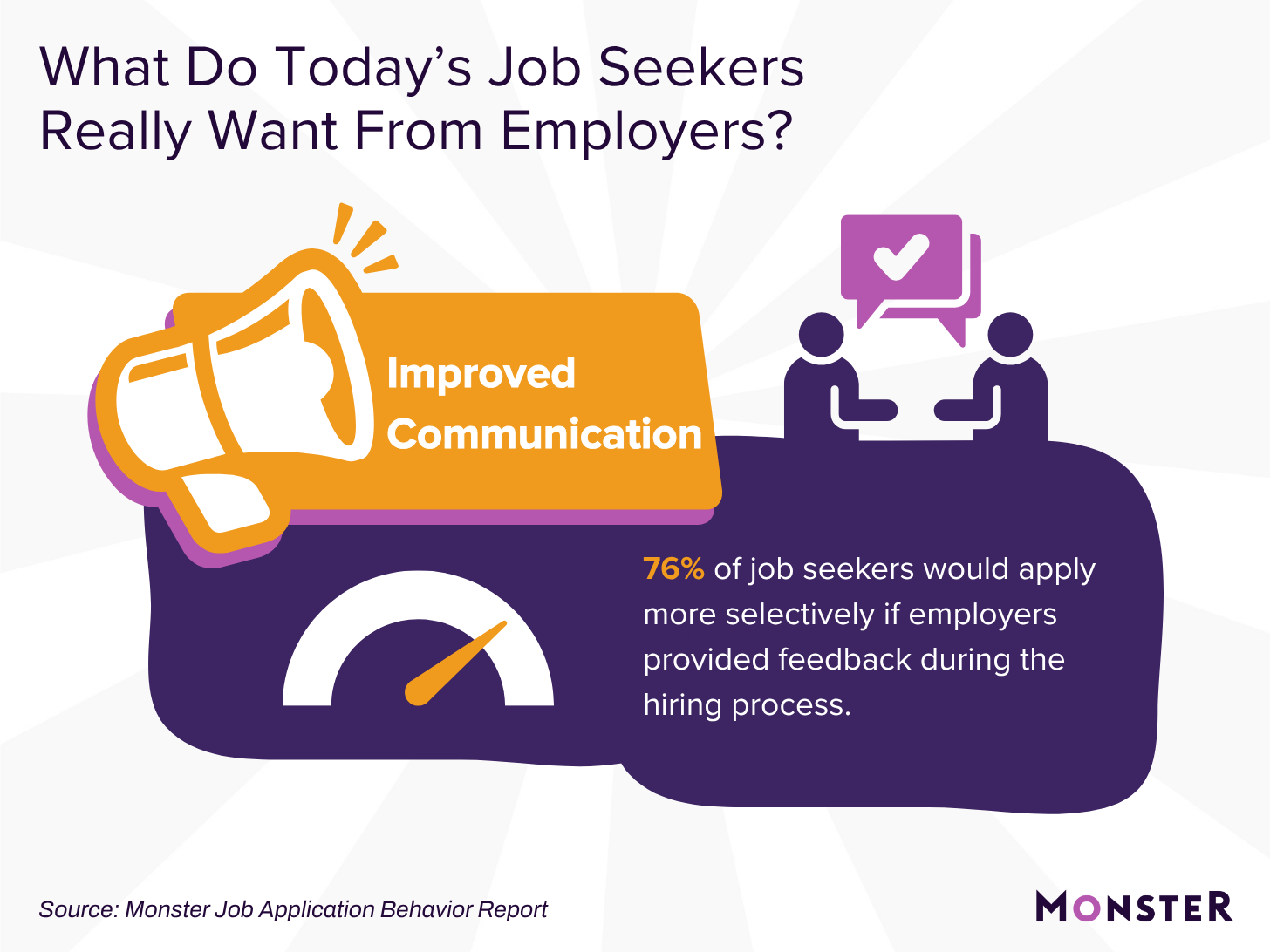
76% of job seekers say they would apply more selectively if they received more feedback from employers after applying.
When job seekers don’t hear back, many adjust by:
- Applying to more roles
- Applying faster
- Filtering opportunities less carefully
For candidates, volume becomes a way to stay visible when the process feels uncertain. For employers, that behavior can make it harder to identify the most interested and best-matched applicants.
Technology is changing how candidates apply
Applicant tracking systems are influencing how candidates approach the job search.
- 45% say applicant tracking systems make them more likely to apply broadly
- 21% assume many resumes are screened out automatically
- 22% rely on Quick Apply just to save time
- 14% focus on keywords instead of job fit
When candidates optimize for visibility, alignment can drop. Instead of applying only to roles that closely match their skills and experience, some job seekers focus on getting through the system.
Speed can reduce selectivity
57% of candidates use Easy Apply or Quick Apply tools for at least some applications. These tools can:
- reduce friction
- lower the barrier to applying
- make it easier for job seekers to submit more applications
The result is a higher volume of applications, but not always a higher volume of high-intent candidates.
The Hidden Cost for Recruiting Teams
Broad application behavior can affect how hiring pipelines perform.
- More applications to review
- Lower average candidate alignment
- Longer screening cycles
- Greater difficulty identifying high-intent candidates
What looks like strong demand can slow hiring down if recruiters are spending more time sorting through applications that are not closely aligned with the role.
The Opportunity for Recruiters
This behavior is not fixed. When employers improve communication and make fit easier to understand, candidates may have more reason to apply selectively.
When recruiting teams improve visibility and communication:
- Candidates can better understand whether a role is right for them
- Application quality can improve
- Screening can become more efficient
- Recruiters can spend more time with better-matched candidates

How Recruiters and Hiring Managers Should Respond
To reduce broad, low-alignment application behavior:
- Provide clear status updates during the hiring process
- Set expectations around timelines and next steps
- Acknowledge applications early, even with automation
- Make job descriptions clear, specific, and realistic
- Help candidates understand fit before they apply
These changes help candidates self-select and can improve pipeline quality before applications ever reach the screening stage.
The Bottom Line
High application volume does not always mean high intent.
In many cases, it reflects how job seekers respond to limited feedback, unclear next steps, and hiring systems that feel difficult to navigate.
Recruiters and hiring managers who improve transparency, communication, and role clarity can reduce noise, improve candidate fit, and build more efficient pipelines.
Methodology
The findings in this report are based on a survey conducted by Monster using the Pollfish platform among 1,006 U.S. job seekers on March 21, 2026. Respondents answered a series of single-selection and multiple-choice questions about their current job search strategies, application behaviors, and experiences with employer communication during the hiring process. The sample included job seekers across a range of industries, age groups, genders, and education levels to reflect the diversity of the U.S. workforce.