

Five years ago, I wrote that hiring is a sales and marketing process. I believed it then, and I believe it now, maybe more so. You build a pipeline, create demand, engage people, and eventually convince the right person to say yes. That part hasn’t changed. What’s changed is what’s flowing through the talent funnel.
Talk to almost any talent acquisition leader today and you’ll hear some version of the same frustration: we’ve never made it easier for people to apply, yet employers are still struggling to find the right people. Those two things sound like they shouldn’t go together. They do now.
Somewhere in the last few years, hiring turned into a volume game, and both sides of the table are playing it. Employers want more candidates in the pipeline. Job seekers, in turn, apply to more jobs. Technology made both of those things easier, and AI is only pressing harder on the accelerator. What it hasn’t done is make it easier for the right person and the right opportunity to actually find each other.
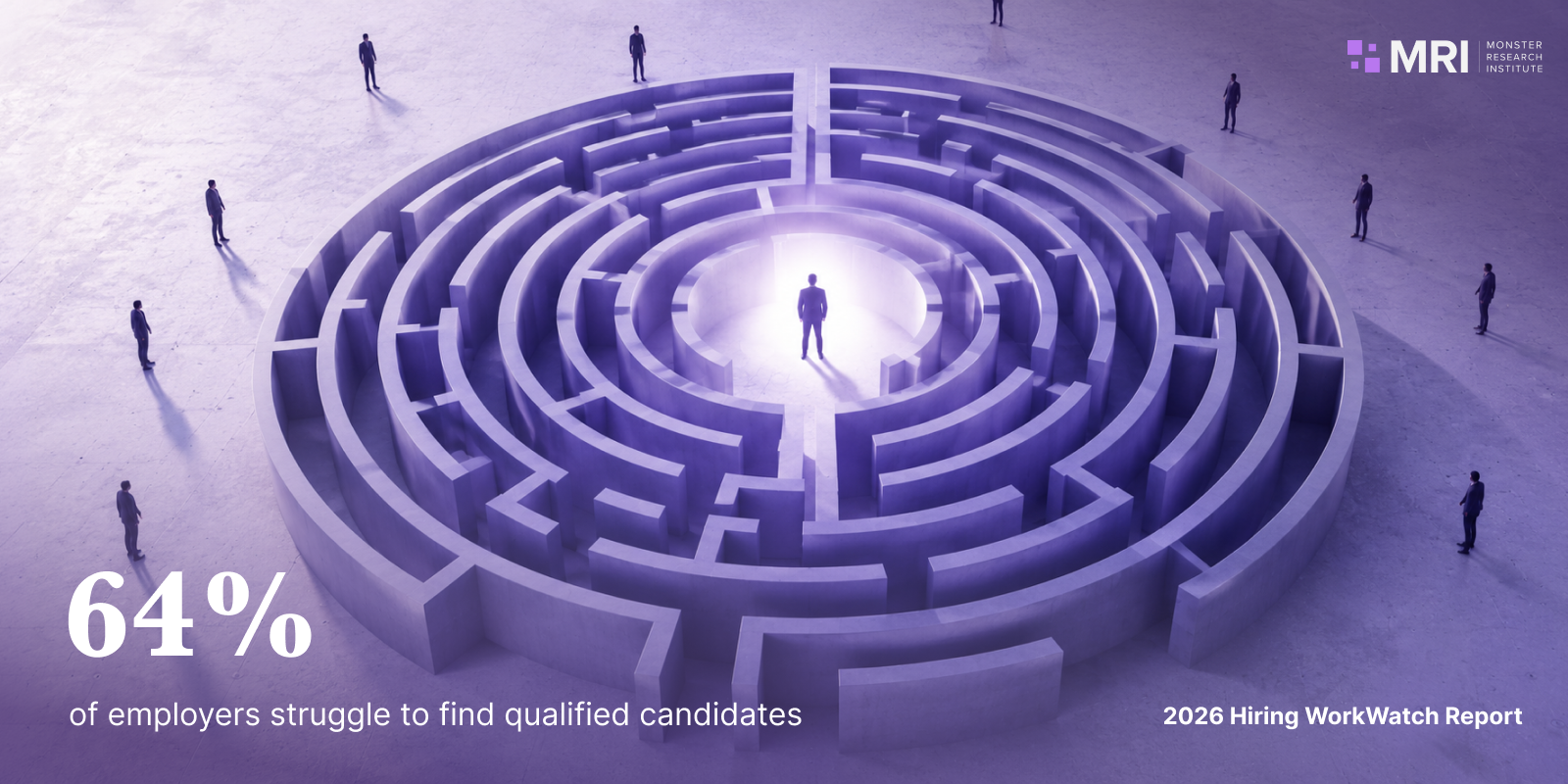
Through the Monster Research Institute, we’ve been studying the labor market from both sides, how job seekers are behaving and where employers are getting stuck. The data puts numbers around something a lot of recruiters already feel in their gut. Monster’s Job Application Behavior Report found that nearly half of job seekers now say they apply broadly instead of selectively. The 2026 Hiring WorkWatch Report found the flip side of that coin: 64% of employers struggle to find qualified candidates. More applications, somehow, and still not enough of the right ones.
I don’t think that’s a candidate problem. It’s a systems problem.
Bigger pipelines aren’t better pipelines
I spent a good chunk of my career in marketing before I ever touched recruiting, and marketing learned this lesson a long time ago: more leads are not the same thing as more revenue. Traffic that doesn’t convert is just traffic. A pipeline stuffed with people who have no real interest in what you’re selling doesn’t help your sales team; it just creates more activity without more conversion.
Recruiting technology, for most of its history, has optimized for reach. Get the job in front of more people. Generate more applicants. Help recruiters manage bigger and bigger candidate pools. The industry has spent years and a lot of money chasing scale, and it’s worked — there’s more activity on both sides of the hiring market than there’s ever been. But a bigger pool isn’t automatically a better one, and I think we’re starting to see the limits of volume as a strategy.
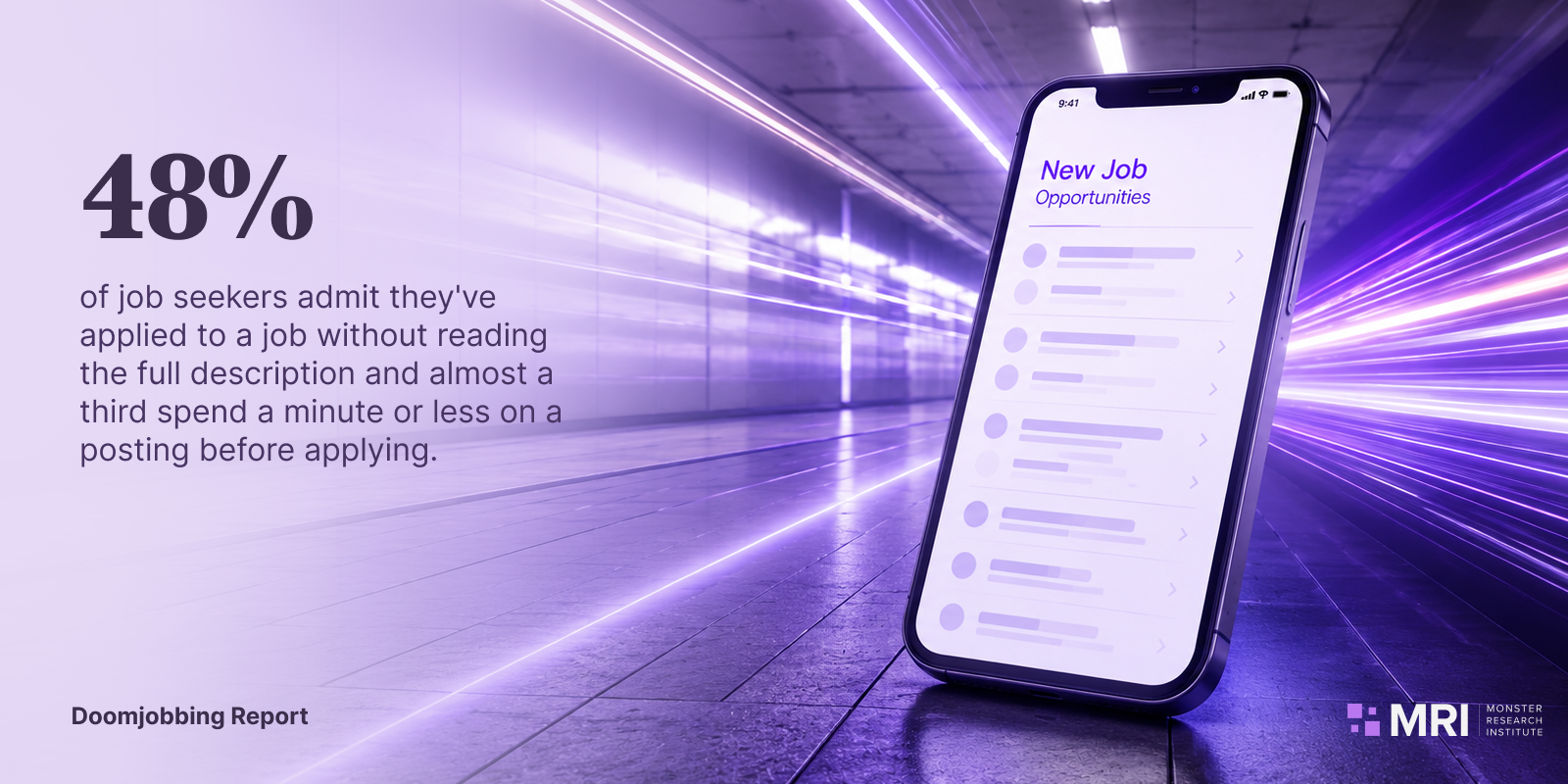
Here’s what that looks like from the candidate’s side. In the Job Application Behavior Report, 45% of job seekers said applicant tracking systems make them more likely to fire off a higher volume of applications. Separately, Monster’s Doomjobbing Report found that 48% of job seekers admit they’ve applied to a job without reading the full description and almost a third spend a minute or less on a posting before applying.
It would be easy to read those numbers and blame the job seeker. I’ve never found that particularly useful, and I don’t think it’s fair. People behave rationally given the system they’re in. A salesperson who knows most prospects won’t respond builds a bigger list. A marketer whose channel gets less predictable spreads out and casts a wider net. When a candidate can’t see what happens after they hit submit, applying to everything starts to look like the smart move, not the lazy one.
The map candidates are working from has changed too
There’s a second piece of this that goes beyond application volume. Monster’s Job Search Strain Report found that 64% of job seekers have applied for a role outside their typical industry or profession. That’s a big number, and I don’t think it means those candidates are unqualified. More likely, it means people are trying to translate skills they already have into work that looks different on paper than what they’ve done before.
Career paths just aren’t as linear as they used to be. Skills move across industries more freely than job titles do, and AI is changing what happens inside a lot of roles faster than our hiring processes are built to notice. A resume that doesn’t follow the expected script might still belong to a great hire. A familiar title doesn’t tell you nearly as much as it used to about what someone can actually do.
This is where I think the next generation of recruiting technology earns its keep, not by getting better at matching keywords on a resume to keywords in a job posting, but by getting better at understanding skills, intent, and what a job actually requires, and finding where those things overlap. AI has a real role to play here. It can process more information than a person can, spot patterns, and take repetitive work off a recruiter’s plate. But I keep coming back to this: the point was never the technology. The point is helping people on both sides of the table make a good decision sooner.
Relevance, not reach
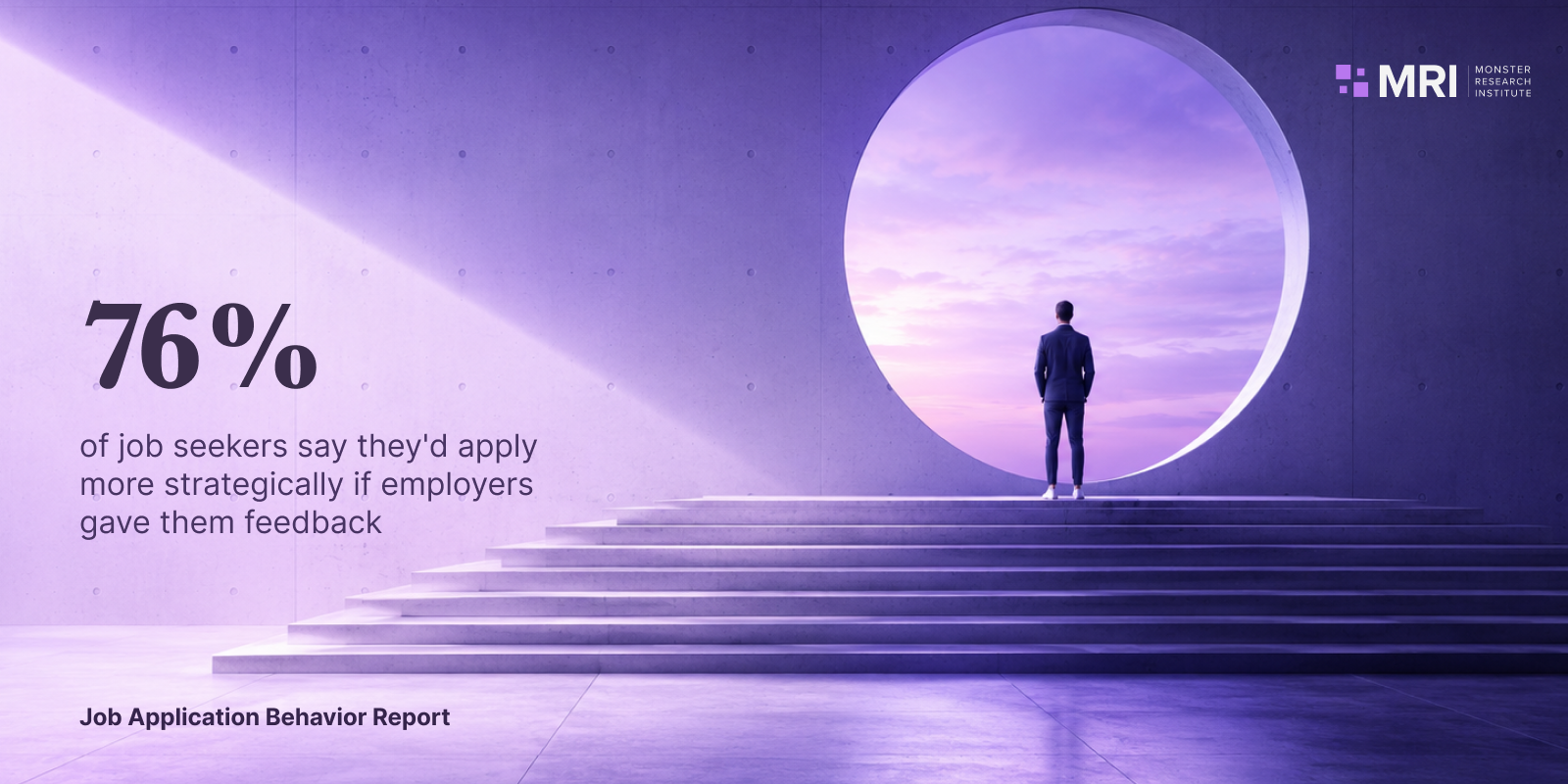
Of everything we’ve studied through the Monster Research Institute, one number has stuck with me more than the rest: 76% of job seekers say they’d apply more strategically if employers gave them feedback.
Read that carefully, and I don’t think it says candidates want to apply to 200 jobs. I think it says a lot of them feel like the process is forcing their hand.
That’s the opening: not more applications, better signal on both sides of the marketplace. Does this person have the skills for the job? Are they actually interested in it, or just casting a line? Does the role fit what they want? And can we help both sides reach that answer faster?
I’ve built my career at the intersection of marketing and talent acquisition, and I still believe what I believed five years ago: great people grow great companies, and talent is a real competitive edge. What’s different now is the amount of noise standing between employers and the people they’re trying to hire. The companies that come out ahead won’t be the ones with the biggest applicant numbers to report at the end of the quarter. They’ll be the ones who get sharper at finding the right candidates and building a process that keeps those candidates engaged instead of losing them along the way.
I wrote five years ago that candidates are like customers, and there’s a journey before they buy. I still believe that too. Marketing figured out how to move past counting impressions and clicks and started chasing intent, relevance, and conversion instead. Talent acquisition is due for the same shift.
For a long time, this industry measured itself by how big it could build the pipeline. The next chapter should measure itself by how well that pipeline actually connects people to work.
The future of hiring isn’t more volume. It’s better signal.
By Thad Price
Thad Price is the SVP of Marketing & Strategy at BOLD, a global career-technology company that builds and operates platforms supporting job seekers and employers across the hiring ecosystem.